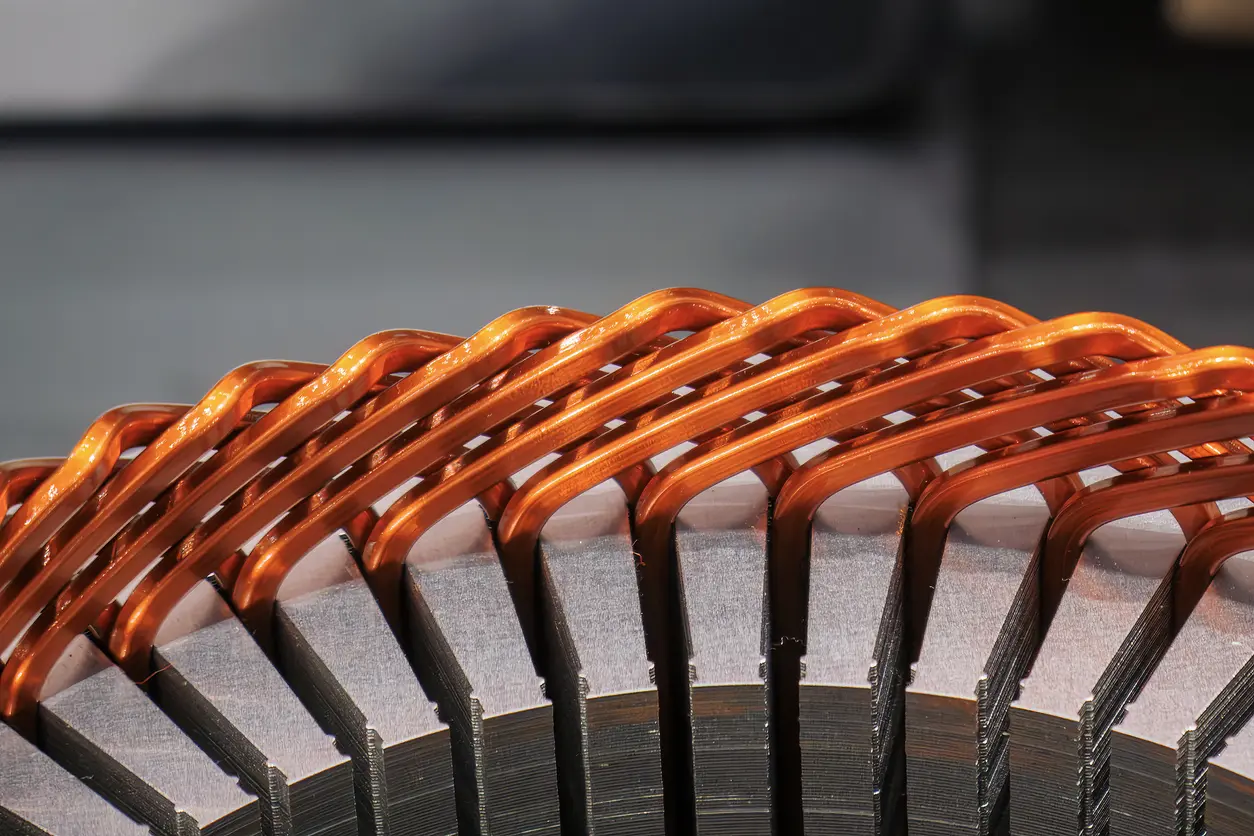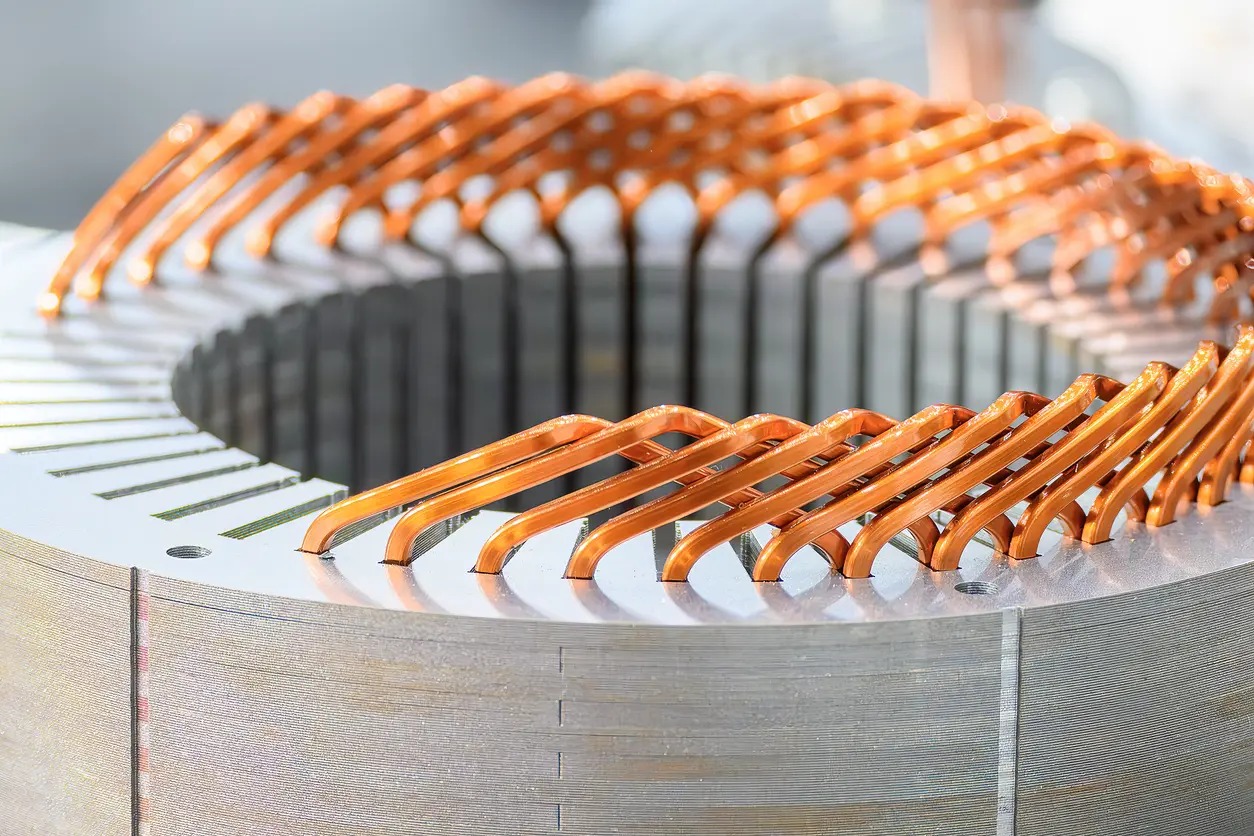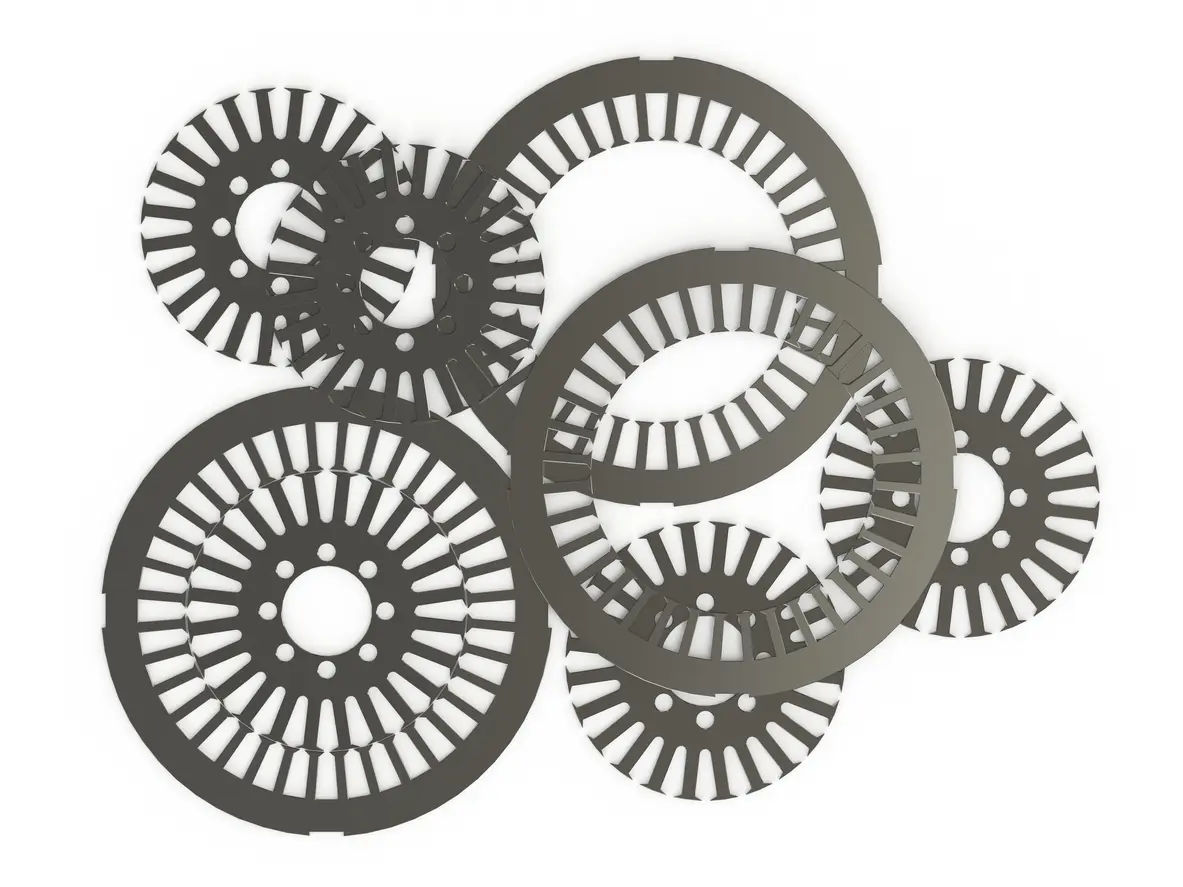
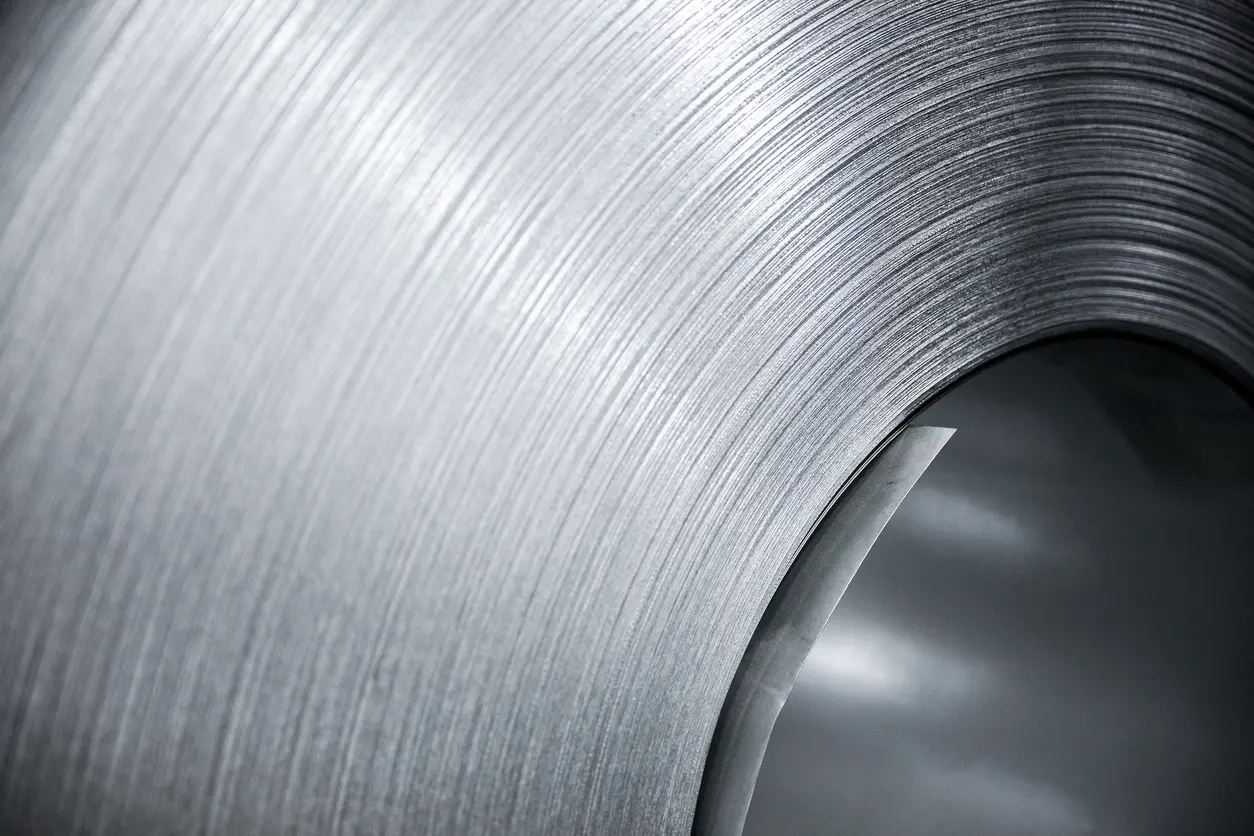
Discover the top 5 stator core materials for high-speed motors, including Thin-Gauge Silicon Steel, Cobalt-Iron, and Amorphous Metals. We compare efficiency, core loss, and cost to help engineers optimize performance for EVs and aerospace applications.
Introduction
As motor speeds increase, the frequency of the changing magnetic field rises in tandem. For standard stator core materials, this creates a significant problem: excessive heat generation from hysteresis and eddy current losses, leading to thermal failure and leading to diminishing power density. When selecting the right core for an electric motor stator, it is not a simple matter of cost optimization. It has become a critical engineering decision for thermal survival and performance.
Based on current ASTM standards and performance data from leading lamination manufacturers, this guide breaks down the five best stator core materials available in 2026 for high-speed motor applications. We will analyze the trade-offs between magnetic performance, thermal characteristics, and manufacturability to help engineers select the optimal stator core material for their specific design requirements.
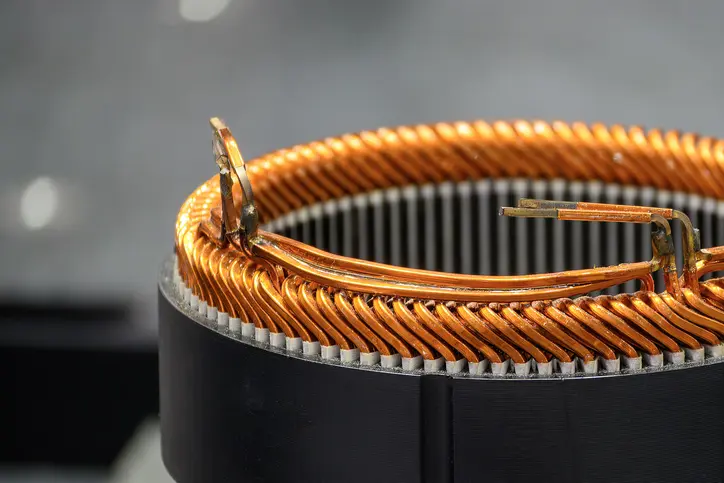
The Big 5: An Analysis of High-Speed Stator Materials
Each stator core material offers a unique profile of benefits and drawbacks. The optimal choice depends entirely on the specific constraints and performance targets of the application, whether it’s maximizing power density in aerospace or achieving cost-effective efficiency in electric vehicles.
1. Thin-Gauge Non-Oriented Silicon Steel (The Industry Standard)
Thin-gauge non-oriented silicon steel (NOES) represents the benchmark stator core material for a vast range of high-speed motor applications, most notably in electric vehicle (EV) traction motors. While standard 0.35mm electrical steel might be too thick and lossy for high-frequency operation, grades with thicknesses of 0.15mm to 0.25mm (e.g., M19) excel in performance, though cost and manufacturability remain potential challenges.
- Pros: This stator core material offers a high saturation flux density, typically between 1.6 T and 1.8 T, allowing for robust torque production. Its widespread availability and well-established supply chain ensure a reliable and cost-effective manufacturing process.
- Cons: Despite the reduced thickness, eddy current losses still increase significantly at frequencies above 1,000 Hz. For applications demanding extremely high speeds, even the thinnest laminations of this stator core material may prove insufficient.
2. Cobalt-Iron Alloys (The High-Performance Powerhouse)
When maximum power density is the primary objective, cobalt-iron (Co-Fe) alloys like Hiperco 50 are unparalleled. These stator core materials boast the highest magnetic saturation, reaching up to 2.4 T. This characteristic allows engineers to design smaller, lighter motors that deliver immense torque, making them indispensable for weight-critical applications.
- Best For: Aerospace generators, Formula E racing powertrains, and high-performance medical devices benefit from the significant size and weight reductions enabled by Co-Fe alloys as stator core materials.
- The Catch: This performance comes at a steep price. Cobalt-Iron is often 10 to 20 times more expensive than silicon steel. It also requires a complex and precisely controlled annealing process to achieve its magnetic properties, adding to manufacturing complexity.
3. Amorphous Metal (The Efficiency King)
Amorphous metals feature a unique non-crystalline atomic structure that lacks the grain boundaries present in traditional crystalline stator core materials like silicon steel. This disordered structure significantly reduces hysteresis losses by minimizing domain wall pinning, while the material’s ultra-thin ribbon form (~20–30 μm) and high electrical resistivity greatly suppress eddy current losses. As a result, amorphous stator cores can reduce total core losses by up to 70% (or more in optimized cases) compared to conventional silicon steel, positioning them as a strong option for ultra-high-efficiency motor and transformer designs.
- Best For: Their low-loss characteristics are ideal for high-efficiency industrial motors and next-generation EV, medical equipment concepts where maximizing efficiency is paramount.
- The Catch: Amorphous stator core materials are notoriously brittle and difficult to work with. The material’s hardness complicates the punching and stamping processes required for stator lamination, and its saturation flux density is lower than silicon steel, at around 1.56 T.
4. Soft Magnetic Composites (SMC) (The High-Frequency Specialist)
Soft Magnetic Composites are fabricated from iron powder particles, each coated with an insulating layer. This structure provides isotropic magnetic properties, meaning it can carry magnetic flux in three dimensions. This is a distinct advantage over laminated steels as stator core materials, which are limited to 2D flux paths.
- Best For: SMCs are perfectly suited for axial flux motors and other complex motor topologies where 3D flux paths can be leveraged to create more compact and efficient designs.
- The Catch: The primary trade-offs of this stator core material are lower mechanical strength and reduced magnetic permeability compared to solid laminated steel. The saturation flux density is also moderate, typically around 1.5 T.
5. Nickel-Iron Alloys (Permalloy) (The Precision Choice)
For applications requiring extremely low core losses, ultra-high permeability, and rapid magnetization response, Nickel-Iron (Ni-Fe) alloys like Permalloy are an excellent stator core material. These alloys magnetize and demagnetize with minimal energy input thanks to their exceptionally high permeability and low coercivity, which is advantageous at high frequencies or in precision scenarios.
- Best For: Ultra-high-speed spindles (e.g., >100,000 RPM in specialized tools or instruments), precision scientific devices, magnetic sensors, shielding, and low-power applications where signal fidelity and minimal hysteresis loss outweigh the need for high torque.
- The Catch: High-permeability Permalloy grades have a low saturation flux density, typically 0.7–0.8 T (though some Ni-Fe variants reach ~1.5 T). This restricts flux capacity and makes them unsuitable for high-torque applications like EV traction motors, where higher saturation materials (e.g., silicon steel or CoFe) are preferred.
Comparative Data Analysis
To provide a clearer framework for stator core material selection, the following tables compare the key technical properties and application suitability of the five materials.
Table 1: Technical Property Comparison
| Material | Saturation Flux Density (T) | Core Loss @ High Freq. | Cost Index ($) | Primary Advantage |
|---|---|---|---|---|
| Thin-Gauge Silicon Steel | High (1.7 T) | Moderate | $ | Best Cost/Performance Ratio |
| Cobalt-Iron (Co-Fe) | Very High (2.4 T) | Moderate | $$ | Maximum Power Density |
| Amorphous Metal | Medium (1.56 T) | Very Low | $ | Extreme Efficiency |
| SMC (Composites) | Low-Medium (1.5 T) | Low | $ | 3D Design Flexibility |
| Nickel-Iron (Ni-Fe) | Low (0.8 – 1.0 T) | Very Low | $ | High Permeability |
Table 2: Application Suitability Score (1-5, where 5 is best)
| Application | Silicon Steel | Cobalt-Iron | Amorphous | SMC |
|---|---|---|---|---|
| EV Traction Motor | 5 | 3 | 4 | 3 |
| Aerospace Generator | 3 | 5 | 2 | 3 |
| High-Speed Spindle | 4 | 4 | 3 | 2 |
| Axial Flux Motor | 2 | 2 | 3 | 5 |
Real-World Application Examples
- Tesla Model 3/Y: These vehicles famously use various grades of Non-Oriented Electrical Steel (NOES) as their stator core material, balancing the need for high efficiency and range with the realities of mass-production costs.
- Aerospace Actuators: Cobalt-Iron is frequently used as a stator core material in aerospace applications to minimize component weight, a critical factor where the high material cost is justified by overall aircraft performance gains.
- Drone Motors: The push for lightweight, compact, and efficient drone motors has led designers to increasingly explore Soft Magnetic Composites as a next-generation stator core material.
The Future of High-Speed Materials
Thin-Gauge Silicon Steel will remain the dominant stator core material for around 90% of high-speed applications, given its unmatched balance of performance, cost, and manufacturability. However, as demand for axial flux motors grows, Soft Magnetic Composites are set to play a larger role in the evolution of stator core materials for compact and power-dense designs.
Frequently Asked Questions (FAQ)
Q1: What is the function of the stator core in a high-speed electric motor?
The stator core serves as the foundation for the windings and provides a low-reluctance path for magnetic flux. Its material selection directly affects efficiency, power density, and loss characteristics at high operating speeds.
Q2: Why are core losses higher in high-speed motors?
As rotational speed increases, the frequency of the alternating magnetic field in the stator core rises. This results in higher hysteresis and eddy current losses, making material choice crucial for thermal management.
Q3: Can I use the same stator core material for both low-speed and high-speed motors?
Not always. While certain materials like thin-gauge silicon steel work in many applications, high-speed motors often require specialized materials with lower core losses and higher thermal stability.
Q4: What impacts the cost of stator core materials most?
Material properties such as magnetic saturation, ease of manufacturing, and supply availability drive costs. High-performance alloys like cobalt-iron or complex materials like amorphous metal are significantly more expensive than standard silicon steel.
Q5: Are there any new trends in stator core materials for the future?
Yes, the move toward axial flux designs and a focus on power density is driving interest in soft magnetic composites and advanced alloy formulations.
Q6: Where can I learn more about electric motor stators and their role in motor performance?
For an in-depth look at design considerations and technology trends, check out our main article on the electric motor stator.